Search Engine Optimization

SEO services for small business growth and visibility
Search Engine Optimization

SEO Services for Small Business: Why Your Business Needs It in 2026

So you’ve got a small business, a decent website, maybe even a logo you’re proud of… but nobody’s finding you on Google. Sound familiar? Yeah, you’re not alone. This is literally the #1 complaint we hear from small business owners at GrowWithWeb, and honestly, it usually comes down to one thing: SEO And that’s exactly where the right SEO services for small business come in, the kind that actually get your phone ringing, not just your rankings moving Here’s the frustrating part. You did everything “right.” You built a website, you posted a few times on Instagram, maybe you even ran a boosted post or two. But your phone still isn’t ringing, and your competitor down the street somehow shows up first every time someone searches for what you sell. That gap almost always comes down to whether you’ve invested in solid SEO services for small business, or skipped it entirely Let’s break down why SEO services for small business owners aren’t just a “nice to have” anymore, they’re kind of the whole game. What Exactly Are SEO Services for Small Business? Okay, quick and dirty explanation before we go deeper. SEO (Search Engine Optimization) is basically the process of tweaking your website so Google (and Bing, sure) actually understands what you do and shows you to people searching for it. Think of it as translating your business into a language search engines can read and trust. SEO services for small business are just a more affordable, scaled-down version of what big companies pay agencies six figures for. Same principles, smaller budget, more targeted approach because let’s be real, a local bakery doesn’t need to rank in Tokyo. It needs to rank for people within a 10-mile radius who are craving croissants right now. A good SEO service isn’t just “adding keywords” to your site (please, run from anyone who says that’s the whole strategy). It’s a mix of technical fixes, content creation, local optimization, and building trust signals that search engines actually care about. Why Small Businesses Specifically Need a Different SEO Approach Big brands throw money at broad keywords like “shoes” or “insurance.”Not every SEO approach works the same for every business, which is exactly why SEO services for small business look nothing like enterprise-level SEO. They can afford to lose that battle for months while they slowly build authority. Small businesses can’t (and honestly shouldn’t) play that game. You need to be smart, local, and specific. Local Intent Matters More Than Volume A keyword with 50 searches a month that’s hyper-local and full of buying intent (like “bakery near me open now”) will make you more money than a broad keyword with 10,000 searches a month that’s way too competitive to rank for anyway. When small business owners attempt to do their own SEO, they frequently make this error.. They chase big, flashy search volume numbers instead of the smaller, hungrier searches that actually convert into paying customers. Your Budget Should Match Your Battlefield There’s no point competing with a national chain’s marketing budget. Smart small business SEO means picking your battles: local searches, niche long-tail keywords, and specific service pages that a giant competitor probably hasn’t bothered optimizing for. Why SEO Matters More Than Ads for Long-Term Growth Ads are great. We love ads. Paid search and social ads can get you in front of people almost instantly, and there’s a place for that in nearly every marketing plan. But here’s the thing nobody tells you: the second you stop paying for ads, the traffic disappears. Poof. Gone. It’s like renting an apartment. You get to live there, but the moment you stop paying rent, you’re out. SEO is different. It’s slower to build, sure, but once you’re ranking, you’re getting free, consistent traffic every single day without paying per click. It’s more like buying a house. It takes longer, costs effort upfront, but eventually you own something that keeps paying you back. The Real Cost Comparison Paid Ads SEO The smartest approach, honestly, is usually a mix of both. Use ads for that quick visibility boost while your SEO strategy builds in the background, and eventually let organic search take over as your primary traffic source. Core SEO Services Every Small Business Should Consider Not all SEO is created equal, and honestly a lot of agencies overcomplicate this on purpose to justify bigger invoices.When you’re comparing SEO services for small business, these are the core pieces that actually move the needle, everything else is just noise Here’s what actually matters, broken down in plain English. On-Page SEO This is the stuff on your actual website: title tags, meta descriptions, header structure, internal linking, image alt text, and making sure your content actually answers what people are searching for. If your homepage title just says “Home” or your business name with nothing else, you’re leaving a ton of ranking potential on the table. Every page should clearly signal to Google what it’s about and who it’s for. On-page SEO also includes things like keyword placement (naturally, not stuffed awkwardly into every sentence), readable URL structures, and making sure your content is genuinely useful, not just written to satisfy an algorithm. Local SEO & Google Business Profile Optimization If you’re a small business with a physical location or a service area, this is arguably the single highest-ROI thing you can do. Optimizing your Google Business Profile, getting reviews, and making sure your NAP (Name, Address, Phone) info is consistent everywhere online can seriously move the needle. Local SEO also involves getting listed in relevant local directories, building location-specific landing pages if you serve multiple areas, and encouraging happy customers to leave reviews (because let’s be honest, most people check reviews before they check anything else). Technical SEO Boring but important. Site speed, mobile-friendliness, broken links, and proper site structure. If Google’s bots can’t crawl your site properly, none of the other stuff matters. You could have the best content in the world, but if your site

Local SEO guide to get more local customers
Search Engine Optimization

What Is Local SEO? Everything Small Businesses Need to Know (2026)

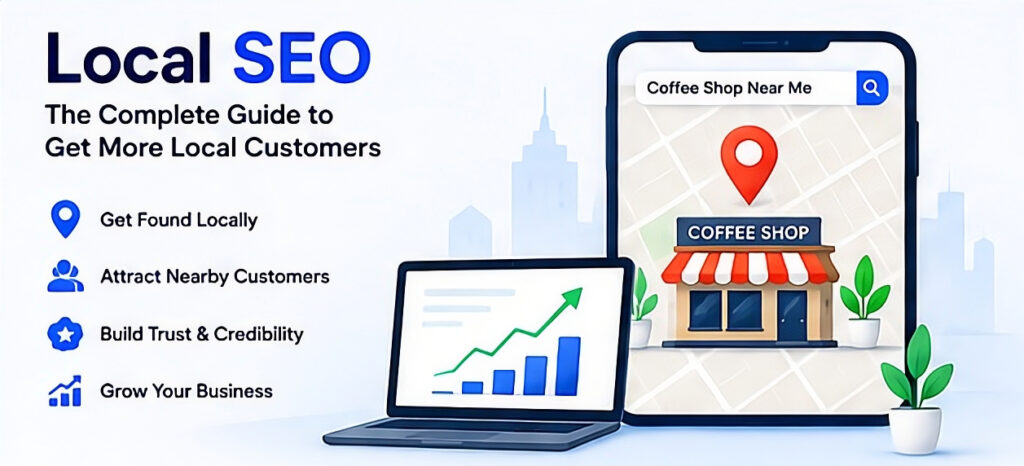
So you’ve probably heard the term “local SEO” thrown around a lot — maybe your friend’s cafe owner buddy won’t stop talking about it, or you saw it while scrolling through some marketing page (kinda like this one, lol). But what actually IS local SEO, and why should your business care about it? Let’s break it down in plain, no-jargon language — with proper headings, examples, and zero boring textbook talk. What Is Local SEO, Really? Local SEO (Search Engine Optimization) is basically the process of making your business show up when people nearby search for stuff you offer. Think “coffee shop near me,” “best plumber in Mohali,” or “digital marketing agency near me.” That’s local search in action. Unlike regular SEO, which tries to rank your website for the whole internet, local SEO focuses on getting your business seen by people in your city, town, or neighborhood — the folks who could actually walk into your store or book your service today. So if you run a bakery, a salon, a gym, a clinic, or literally any local business, this is the stuff that gets real customers walking through your door, not just random traffic from people three countries away who’ll never buy from you. How Local SEO Differs From Regular SEO Regular SEO is like trying to be famous everywhere. Local SEO is like being the most trusted name in your own neighborhood. The Core Difference Regular SEO chases global rankings across broad keywords. Local SEO chases the map pack, “near me” searches, and location-tagged results. Both matter for a growing business, but if you’re local, local SEO gives you way faster and way more relevant results. A Quick Example A national shoe brand cares about ranking for “running shoes.” A local shoe store cares about ranking for “running shoes shop in Mohali.” Same product, totally different game. Why Local SEO Actually Matters for Your Business Here’s the thing — almost everyone googles before they buy anything locally. Someone wants a haircut? Before they leave the house, they are searching for “salon near me” online. Someone’s car breaks down? Straight to Google. Someone’s hungry at midnight? You guessed it — Google again. If your business doesn’t show up in those search results (especially in that little map pack at the top), you’re basically invisible to a huge chunk of potential customers. And guess what — your competitors ARE showing up. That’s business walking straight past you and into their doors instead. The Real Benefits of Local SEO Who Benefits the Most? Restaurants, salons, gyms, clinics, repair shops, real estate agents, boutique stores, home services, and pretty much any business that depends on nearby foot traffic or local bookings. How Does Local SEO Actually Work? Google decides who to show in local results based on three main things. The Three Ranking Factors Basically, the more Google trusts and understands your business, the higher you show up when someone nearby hits search. The Building Blocks of Local SEO Alright, let’s get into the “how” a bit, without making it feel like rocket science. 1. Google Business Profile This is basically your business’s ID card on Google. Name, address, phone number, hours, photos, reviews — all of it lives here. Why This Matters So Much If this isn’t set up properly (or isn’t set up at all), you’re already losing. It’s usually the very first thing Google checks before showing your business in local results. Quick Setup Tips Include authentic images, update your hours, choose precise categories, and reply to feedback on a regular basis. It sounds small but it moves the needle a lot. 2. NAP Consistency NAP = Name, Address, Phone number. Sounds boring, but it’s super important. Where This Needs to Match Your business info needs to be exactly the same everywhere online — your website, Facebook, Justdial, Yelp, wherever. Google gets confused (and trusts you less) if your address is written three different ways across the internet. 3. Online Reviews People trust reviews — like, a lot. A business with a bunch of genuine 4-5 star reviews looks way more trustworthy than one with none (or worse, bad ones). How Reviews Affect Rankings Reviews directly influence local ranking, plus they build instant social proof. It really makes a difference to encourage satisfied consumers to depart A Simple Tip Just ask. Most happy customers are totally fine leaving a review — they just never get asked. 4. Local Keywords This just means using location-based words naturally in your website content. Why Location Matters in Keywords Google leans heavily on location signals when deciding who to show for local searches. Example Instead of just “graphic design services,” you’d want stuff like “graphic design services in Mohali” or “video editing company in Punjab.” Small tweak, big difference. 5. Website Optimization Your website still needs to be fast, mobile-friendly, and easy to navigate. Why It’s Non-Negotiable A slow or clunky website can tank your rankings even if everything else is perfect. Most local searches happen on mobile, so a bad mobile experience is basically a lost customer. Small Details That Add Up Fast load speed, clickable phone numbers, an easy-to-find location page, and clear calls-to-action all contribute to better local performance. 6. Local Backlinks and Citations Getting mentioned or linked by other local websites, directories, or news sites tells Google “hey, this business is legit and known in this area.” It’s basically word-of-mouth, but for search engines. 7. Social Media Presence While not a direct ranking factor, an active social presence builds trust, engagement, and drives traffic — all of which indirectly help your local visibility too. Common Local SEO Mistakes Businesses Make A Quick Reality Check Sound familiar? Don’t worry, literally almost every business makes at least one of these mistakes. The good news is, they’re all fixable, usually pretty quickly too. How Long Does Local SEO Take to Work? Honest answer? It’s not overnight magic. Local SEO usually takes a few weeks to a few months to show

How to rank a new website on Google using SEO strategies
Search Engine Optimization

How to Rank a New Website on Google: A Complete Beginner’s Guide

launching a new website is exciting, but one of the biggest challenges is getting visitors from Google. Since your website is new, Google doesn’t yet know whether it is trustworthy, useful, or relevant to users. If you’re wondering how to rank new website on Google, you’re not alone. The good news is that with the right SEO strategy, even a brand-new website can start appearing in search results and gradually improve its rankings over time. In this guide, you’ll learn the exact steps on how to rank a new website on Google faster and more effectively, helping you build authority, attract organic traffic, and grow your online presence How to Rank A New Website on Google: Why New Websites Struggle to Rank? Understanding how to rank new website on Google starts with understanding how Google evaluates trust and authority. Websites that regularly post helpful material, offer an excellent user experience, and exhibit industry expertise are preferred by search engines.. New websites must build this trust gradually through strong SEO practices and consistent effort. Step 1: Choose the Right Keywords Keyword research is the foundation of SEO. Instead of targeting highly competitive keywords such as: Focus on long-tail keywords such as: Long-tail keywords generally have lower competition and are easier for new websites to rank for.Picking the right long-tail terms is a core part of learning how to rank a new website on Google. How to Find Good Keywords You can use tools such as: Things to Look for in Keywords Example Instead of targeting: “SEO Services” Target: “How long does SEO take to work for a new website?” Why This Works Better Long-tail keywords frequently get visitors who are actively seeking answers and are simpler to rank for. Step 2: Create High-Quality Content Content is one of the strongest ranking factors. Your content should: Google rewards content that helps users achieve their goals.Quality content like this is central to how to rank a new website on Google successfully. Characteristics of High-Quality Content Step 3: Optimize On-Page SEO On-page SEO helps Google understand your content. Important On-Page SEO Elements Title Tag Include your primary keyword near the beginning. Example: Beginner’s Guide to Ranking a New Website on Google Meta Description Write a compelling description that encourages clicks. Example: Discover tried-and-true SEO tactics to use on-page SEO, content production, and keyword research to rank a new website on Google. URL Structure Good URL: yourwebsite.com/rank-new-website-on-google Bad URL: yourwebsite.com/post12345 Heading Structure Use headings properly: Image Optimization Always: Example Alt Text: “SEO strategy for ranking a new website on Google” Step 4: Improve Website Speed Website speed directly affects user experience and rankings. Bounce rates are higher and conversions are lower on a slow website.A slow website increases bounce rates and reduces conversions. Ways to Improve Speed Google prefers websites that load quickly on both desktop and mobile devices.Speed optimization is often overlooked when people search for how to rank a new website on Google. Step 5: Make Your Website Mobile Friendly More than half of internet traffic comes from mobile devices. Google can give your website a lower ranking if it is hard to use on smartphones. Mobile Optimization Checklist Step 6: Submit Your Website to Google Search Console Google Search Console helps Google discover your pages faster. Benefits of Google Search Console Google will crawl your website more quickly if you submit your sitemap.This step plays a key role in how to rank a new website on Google faster. Step 7: Build Internal Links Internal linking connects related pages on your website. Example: A blog about SEO can link to: Benefits of Internal Linking Step 8: Build Backlinks Slowly Backlinks are links from other websites pointing to your website. Google considers backlinks as votes of trust. Safe Ways to Build Backlinks Avoid buying backlinks because it can harm your rankings. Earning backlinks naturally remains one of the safest methods for how to rank a new website on Google. Step 9: Update Content Regularly Google prefers fresh and updated content. Update Existing Articles By Even small updates can improve rankings over time. Step 10: Be Patient and Consistent SEO is a long-term process. Many new websites start seeing noticeable results after: Consistency is often more important than speed. Common SEO Mistakes New Websites Make Avoid these mistakes: Avoiding these mistakes is just as important as following the right steps for how to rank a new website on Google. Frequently Asked Questions How much time does it take for a new website to appear in Google? Most new websites start seeing results within 3 to 6 months if they consistently publish quality content and follow SEO best practices. Can a new website rank without backlinks? Yes, low competition long-tail keywords can rank without many backlinks if the content quality is strong. How long does it take for a brand-new website to appear on Google? Publishing one to two high-quality articles every week is a good starting point for most new websites. Is SEO better than paid advertising? SEO provides long-term traffic while paid advertising provides immediate traffic. Many businesses use both strategies together. Combining both is often the smartest approach to how to rank a new website on Google. Final Thoughts Ranking a new website on Google is possible, but it requires patience, consistency, and a clear strategy.Following these steps consistently is the most reliable way to master how to rank a new website on Google. Focus on: If you continue improving your website and publishing useful content, Google will gradually recognize your website as an authority in your industry. The best time to start SEO was yesterday. The second best time is today.

Scroll to Top